
Cold-Climate Failures
This area sits in a cold climate band with real winter severity, and that shows up in specific failure patterns rather than generic 'garage door trouble.'
Richmond, KY
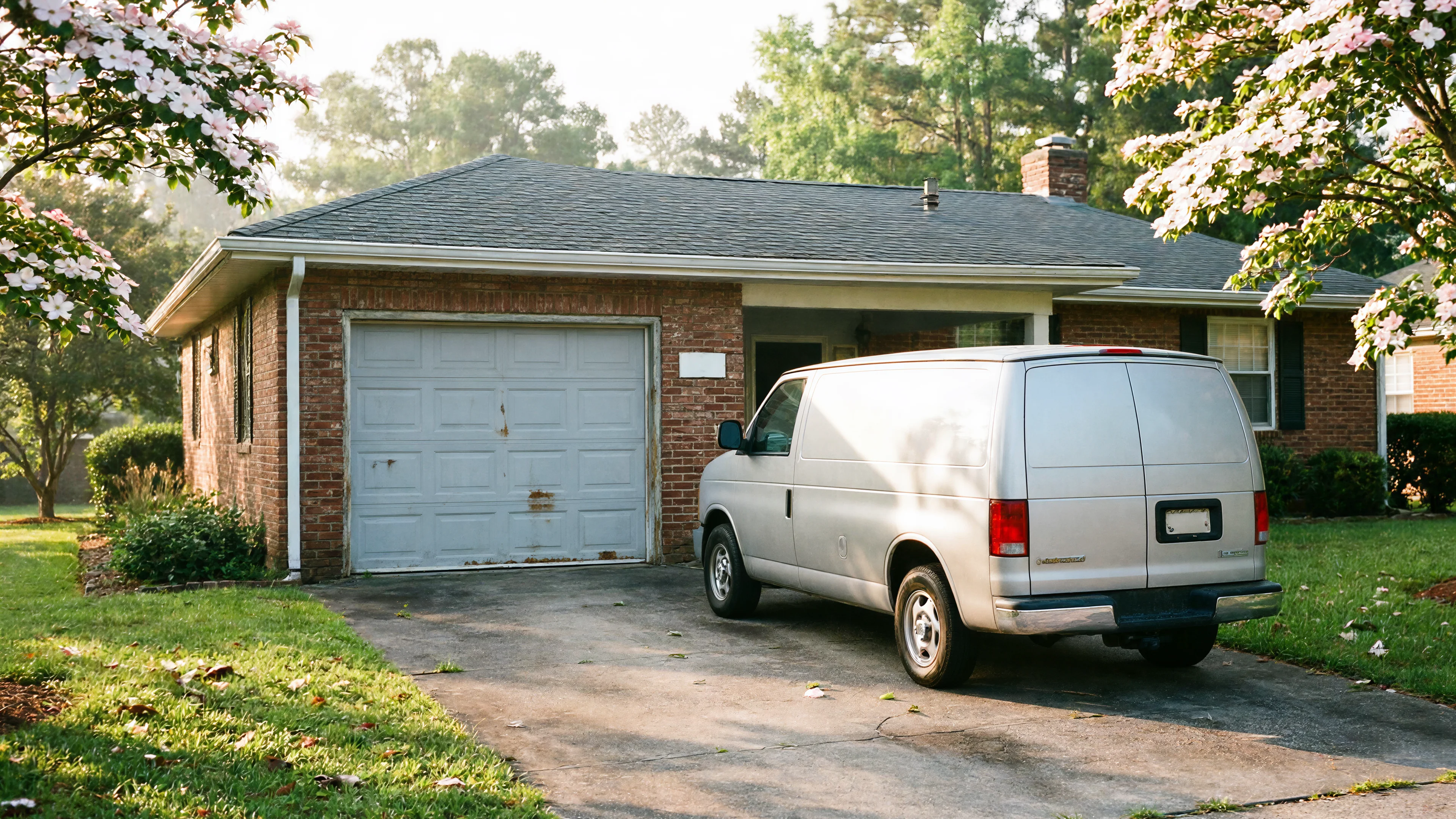
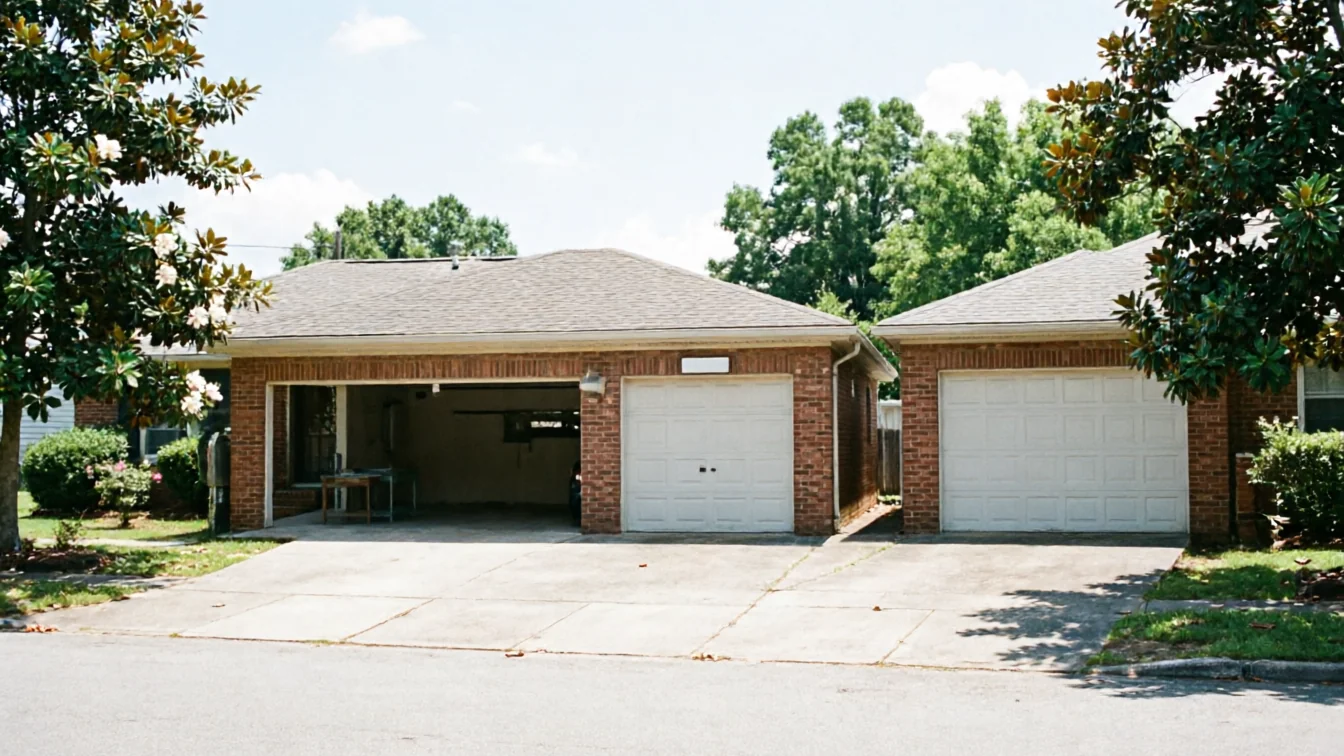
Richmond Garage Door Pros repairs and replaces garage doors on homes built 1959-1988 across Richmond, KY, near Berea, Lancaster, Irvine, and Winchester.
Garage door services


What to expect
Most no-open calls start with a phone description and a few quick questions, enough to load the right parts before a truck leaves. On site we chase the real fault instead of swapping parts blind, then lay out repair or replacement before anything expensive gets touched.
You tell us what the door is doing - won't open, stuck halfway, makes a bang before it quits - and we ask a few questions about the opener, the age of the springs if you know it, and whether the door is a single or a double. That's enough for us to bring the right spring size and cable length on the truck instead of guessing.
On site, the first thing we check is the spring and cable before anything else, because that's where most no-opens start. If it's electrical - opener board, sensor wiring, remote - we test that next. We'd rather find the real problem in ten minutes than replace parts one at a time hoping something sticks.
We'll walk you through what's wrong before touching anything expensive, and give you the choice between repair and replacement when both are honestly on the table.
Quick Fix or Not, We Say So
Not every job needs a truck full of new hardware, and not every job is a quick fix - we tell you which one you've got before we start.
Local detail
Winter severity, not storms, drives the repair list here, and it shows in a predictable set of failures rather than random trouble. Cold fatigues original springs, ice at the bottom seal throws tracks out of line, and the older doors in town have the least tolerance for that repeated stress.
This area sits in a cold climate band with real winter severity, and that shows up in specific failure patterns rather than generic 'garage door trouble.'
Cold steel contracts, and a torsion spring that's been fine all fall will snap on the first hard freeze because the metal's already fatigued and the cold just finishes the job.
We see more spring failures in the coldest stretch of winter than any other time of year, and it's rarely a surprise if the spring was original to a house built decades back.
The other recurring issue is track misalignment from frozen or swollen weather stripping at the bottom panel - ice builds along the seal, the door binds going down, and people force it with the opener until something in the track gives.
On the older 1960s and 70s doors especially, the track gauge wasn't built with much tolerance for that kind of repeated stress.
We don't see much storm-panel damage here compared to wind-heavy regions - it's almost entirely a cold-and-age problem, not a weather-event problem, and that keeps the repair list fairly predictable.
What it costs
We're not going to list prices here that don't match your actual door, but we can tell you what moves the number.
Spring size and door weight matter most - a single lightweight door costs less to fix than a heavier insulated double.
Age matters too: original hardware from the 1959-1988 era sometimes needs a part sourced rather than pulled off a shelf, and that adds to the job.
With a median household income of $51,139 across the service area, most of the calls we get are from owners who want the job done right once, not the cheapest possible patch that fails again in six months.
We price the repair or replacement in front of you before we start, not after, so there's no guessing involved.
We also serve a mix of roughly 16,654 households and 6,658 owner-occupied houses across this area, which is a lot of ground with very different door ages and styles - what drives your price isn't the same as what drives your neighbor's, even two houses down.
Good to know
The houses we work on most are spread across four areas of town that all went up in roughly the same stretch - 1960s and 70s construction, with the housing stock here centered on a median build year around 1971.
That matters for garage doors because it's the era of single-layer steel panels, torsion springs sized for lighter doors, and openers that have usually been replaced at least once since the house was built, even if the door itself hasn't.
If your house sits in one of those older pockets, there's a decent chance the track hardware is original or close to it, which means replacement parts aren't always a shelf item - some older track brackets and panel sizes take a bit longer to source than current stock.
We don't pretend every part shows up same-day; some don't, and we'll tell you up front if yours is one of them rather than quoting a timeline we can't hit.
Newer construction around the edges of town is a different animal - insulated doors, heavier springs, smarter openers - and those jobs look nothing like the ones on the older streets.
Repair or replace?
Most doors here are as old as the house, with only the springs swapped along the way. We fix what's worth fixing and say so when a door is past saving, because stretching a repair past that point just costs you twice.
A lot of the doors we look at in this area went up with the house, somewhere between 1959 and 1988.
By now the springs have usually been swapped once or twice, but the door itself - the panel steel, the hinges, the track gauge - is original more often than not.
When the bottom panel has rusted through, or the track is bent from being backed into more than once, patching it stops making sense. You end up paying for parts that don't match anything else on the door, and you're back out again in a year.
We'll tell you straight when a door is done. If the torsion spring is the only thing gone and the rest of the hardware is sound, we fix the spring and leave the rest alone - no reason to sell a full door when it isn't needed.
But if the opener is pulling a warped panel, or the rollers have chewed the track edges down, replacement is the honest answer, not the upsell.
That's the limitation worth saying plainly: we don't stretch a repair past the point where it's cheaper in the long run to just replace the thing.
Towns we serve
Questions
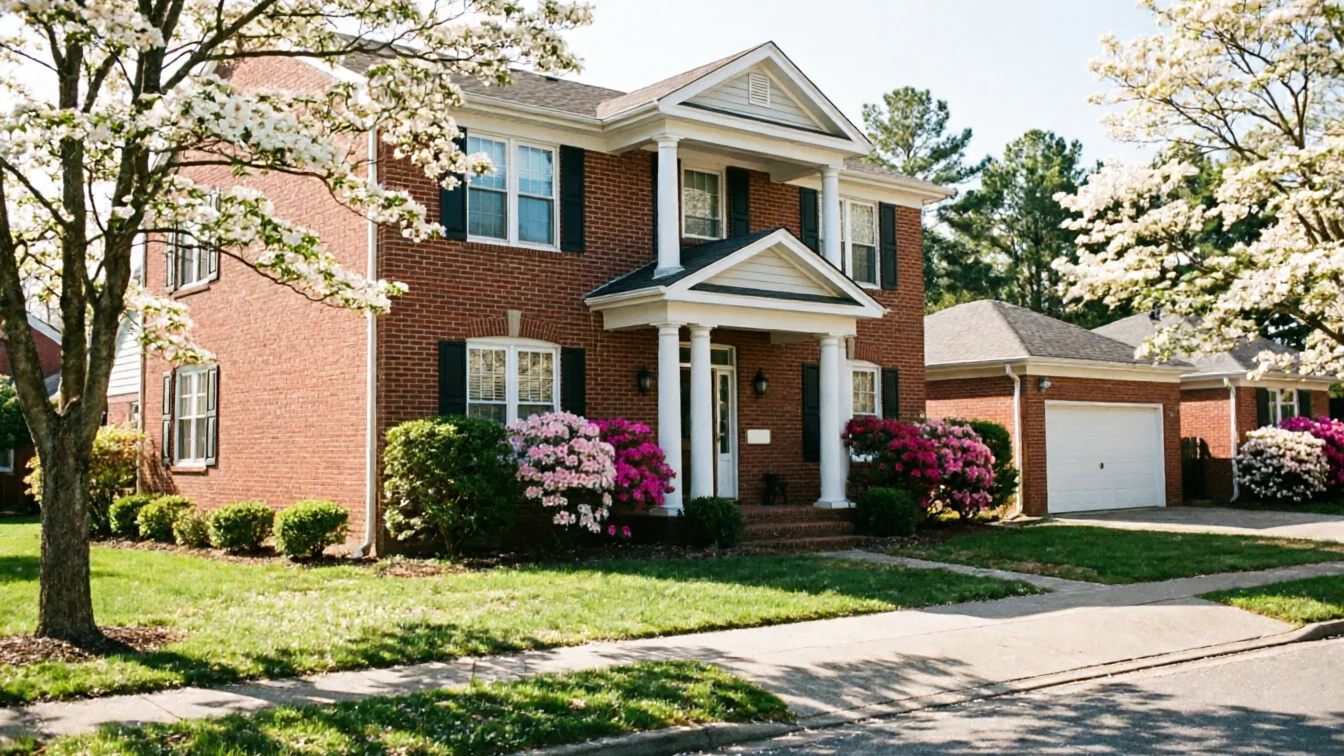
If your house falls in that range, there's a good chance the door panel and track are original or close to it, even if the opener and springs have been swapped since. Housing in this area centers on a median build year around 1971, which puts a lot of doors squarely in that older hardware category.
Cold contracts the steel and speeds up fatigue in a spring that's already near the end of its life. This area sits in a cold climate band with real winter severity, so a spring that limps through fall often doesn't make it through the first hard freeze.
We work out from Richmond toward Berea, about 10 miles out, and a bit further to Lancaster, Irvine, and Winchester, each 17 to 20 miles away. If you're near one of those, give us a call and we'll tell you straight whether it's in range.
No. Some track brackets and panel sizes from older construction aren't a same-day shelf item, and we'd rather tell you that up front than quote a timeline we can't hit. We'll let you know during the call if your part looks like one of those.
Ready when you are
Richmond Garage Door Pros repairs and installs garage doors, springs and openers in Richmond, KY and the surrounding area.